

 Mexico
 South Korea
 South Africa
 Czechia
 Canada
 Switzerland
 Qatar
Qatar Bosnia & Herz
 Brazil
 Morocco
 Scotland
 Haiti
Haiti USA
USA Paraguay
 Australia
 Türkiye
 Germany
 Ecuador
 Ivory Coast
 Curaçao
 Netherlands
 Japan
Japan Tunisia
 Sweden
 Belgium
 Iran
Iran Egypt
Egypt New Zealand
 Spain
Spain Uruguay
 Saudi Arabia
 Cape Verde
 France
 Senegal
 Norway
 Iraq
Iraq Argentina
 Austria
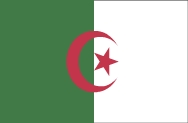 Algeria
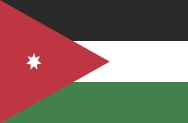 Jordan
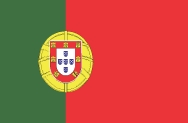 Portugal
 Colombia
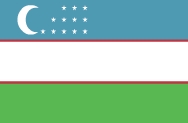 Uzbekistan
 DR Congo
 England
 Croatia
 Panama
 Ghana
Ghana
2026 World Cup Teams Set – Missing Group of Death
2026 World Cup: Why There Is No True “Group of Death”
With all 48 teams now confirmed and the final groups officially set for the 2026 FIFA World Cup, the stage is finally complete—and there are already storylines emerging before a ball is even kicked. One of the biggest surprises? Italy national football team will not be part of the tournament, extending their shocking absence from the world’s biggest stage. But as we shift our focus to the groups themselves, one thing becomes clear: despite all the debate and anticipation, there is no true “group of death” in 2026.
The phrase “group of death” has long been one of the most feared labels in international football. It represents a nightmare scenario—three (or more) elite teams battling for just two spots, where a global powerhouse is guaranteed to be eliminated early.
But heading into the 2026 FIFA World Cup, that concept may no longer apply.
For the first time in tournament history, 48 teams will compete in an expanded format. With 12 groups and three teams advancing from most of them, the structure itself has diluted what once made the group stage so ruthless.
And when you break down the groups, one thing becomes clear:
There is no true group of death in 2026.
The Expansion Changed Everything
In previous World Cups, groups of four teams allowed only two to advance. That created high-stakes drama where even one mistake could send a top nation home.
In 2026, that pressure is significantly reduced.
With three teams advancing from eight of the 12 groups, even strong teams that stumble early still have a path forward. The margin for error is larger, and the likelihood of multiple top teams being eliminated in the same group is drastically lower.
Simply put—a group can’t be “deadly” if almost everyone survives.
Group D: The Most Competitive… But Not Deadly
Group D: United States, Paraguay, Australia, Türkiye
On paper, this might be the most intriguing and competitive group in the tournament.
United States men’s national soccer team
Paraguay national football team
Australia national soccer team
Turkey national football team
What makes this group stand out is not dominance—but parity.
All four teams are relatively close in level. There is no clear favorite, no guaranteed bottom team, and every match could realistically go either way.
This is what makes Group D dangerous—but not in the traditional sense.
A true group of death requires at least three elite, top-tier contenders. Group D doesn’t have that. Instead, it offers something different:
A group where every game feels like a coin flip.
Rather than eliminating giants, this group threatens to create chaos through balance. It’s less about survival of the strongest—and more about who can grind out results.
Group L: A Traditional Feel… Still Not Enough
Group L: England, Croatia, Panama, Ghana
England national football team
Croatia national football team
Panama national football team
Ghana national football team
If you’re searching for a more “classic” group of death, this might be your closest match.
England and Croatia bring pedigree, tournament experience, and high expectations. Ghana has proven its ability to compete on the world stage, and Panama continues to grow as a competitive CONCACAF side.
But even here—the definition falls short.
There are not three true global powerhouses in this group. And with three teams likely advancing, even a difficult matchup doesn’t carry the same knockout-level pressure.
What About the Strongest Group on Paper?
Some might point to Group I (France, Senegal, Norway, Iraq) as the toughest overall.
France national football team
Senegal national football team
Norway national football team
It features elite talent and strong rankings across multiple teams.
But again—three teams can advance.
So even if this group is statistically the strongest, it still lacks the defining characteristic of a true group of death:
Guaranteed elimination of a major contender.
The New Reality: “Groups of Parity”
If anything, the 2026 World Cup introduces a new concept:
Groups of parity.
Instead of one dominant team and one underdog, we now see groups filled with evenly matched sides where outcomes are unpredictable—but consequences are less severe.
Group D is the perfect example of this shift.
Rather than fearing elimination, teams now face a different challenge:
Navigating a group where every match is competitive, but few are decisive.
Final Take
The “group of death” isn’t just rare in 2026—it may be extinct.
The expanded format, combined with broader global representation, has reshaped the tournament:
More teams
More balance
Less immediate danger
That doesn’t mean the World Cup will be any less exciting.
It just means the drama has shifted—from survival… to separation.
And in 2026, the biggest challenge won’t be escaping a group of death.
It will be proving you’re better than everyone else in a field where almost everyone gets a second chance.