

 Mexico
 South Korea
 South Africa
 Czechia
 Canada
 Switzerland
 Qatar
Qatar Bosnia & Herz
 Brazil
 Morocco
 Scotland
 Haiti
Haiti USA
USA Paraguay
 Australia
 Türkiye
 Germany
 Ecuador
 Ivory Coast
 Curaçao
 Netherlands
 Japan
Japan Tunisia
 Sweden
 Belgium
 Iran
Iran Egypt
Egypt New Zealand
 Spain
Spain Uruguay
 Saudi Arabia
 Cape Verde
 France
 Senegal
 Norway
 Iraq
Iraq Argentina
 Austria
 Algeria
 Jordan
 Portugal
 Colombia
 Uzbekistan
 DR Congo
 England
 Croatia
 Panama
 Ghana
Ghana
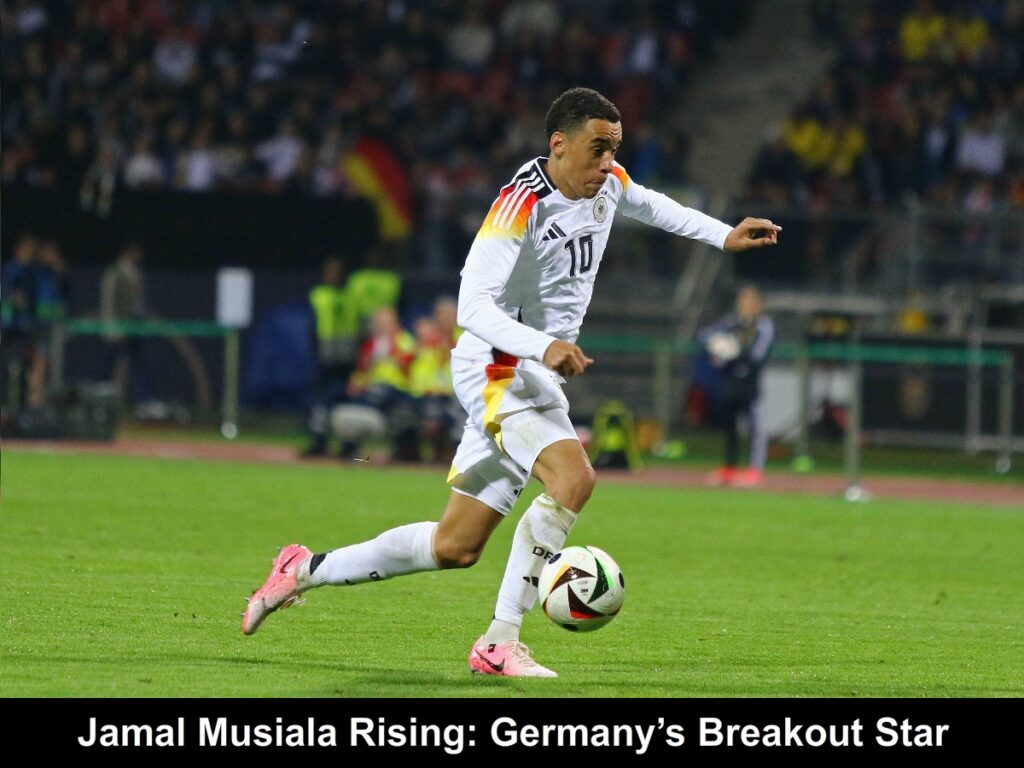
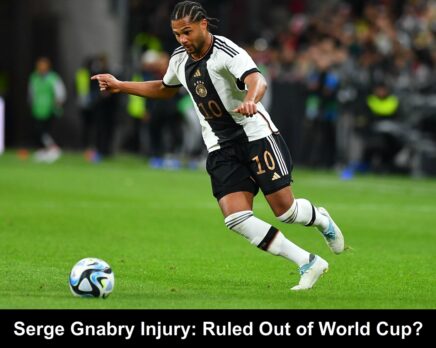
Jamal Musiala Rising: Germany’s Breakout Star Set to Replace Injured Serge Gnabry at World Cup 2026
As the countdown to the 2026 FIFA World Cup continues, one player is rapidly moving to the center of Germany’s hopes: Jamal Musiala. The Bayern Munich star has returned from injury at the perfect time, and with Serge Gnabry now sidelined, Musiala’s importance has grown dramatically.
Germany has spent the last several years searching for the right balance between youth, creativity, and proven quality in attack. Musiala now looks like the player who can bring all of those qualities together. Still only in his early twenties, he already combines high-level experience with the fearless style of a breakout star. If Germany is going to make a deep run at the 2026 World Cup, Musiala could be the player who defines their campaign.
Musiala’s Return Has Come at the Ideal Time
Timing matters in football, especially ahead of a major tournament. Musiala’s return from injury has given both Bayern Munich and Germany a huge lift. After dealing with a serious leg injury, there were understandable questions about whether he would be able to regain full rhythm before the World Cup buildup intensified. Instead, he has returned looking sharp, confident, and dangerous.
His recent production has underlined that point. In limited minutes since returning, Musiala has already posted strong goal contribution numbers, showing he can still change games even when he is not yet playing every possible minute. That is a warning sign for opponents and a major reason for optimism in Germany.
What makes Musiala’s comeback even more important is the context around the national team. Germany is not simply welcoming back a talented player. It is welcoming back one of the few attackers capable of unlocking organized defenses with his dribbling, movement, and imagination in tight spaces. Those are qualities that become priceless at a World Cup, where matches are often decided by one moment of brilliance.
The Gnabry Injury Changes Germany’s Picture
Serge Gnabry’s injury is a major setback for Germany. Over the years, Gnabry has been one of the team’s most reliable attacking players, offering direct running, goals, experience, and flexibility across the front line. He knows how to attack space, how to finish quickly, and how to bring urgency to Germany’s offense.
That kind of player is not easy to replace directly. Germany loses an experienced option who has delivered in major matches and understands the demands of international football. Gnabry’s absence means Germany cannot simply continue with the exact same attacking balance and expect identical results.
That is where Musiala becomes even more important. He may not be a like-for-like replacement, but he can give Germany a different kind of attacking power. Instead of replacing Gnabry with another straight-line winger, Germany can shift toward a more fluid and creative system that runs through Musiala’s strengths.
Why Musiala Is the Natural Player to Step Forward
Musiala has already shown at club and international level that he can influence matches in several different roles. He can play as a central attacking midfielder, drift wide from the wing, carry the ball through midfield, or attack the penalty area as a late runner. That versatility makes him the obvious player to build around when another major attacker is unavailable.
At Bayern Munich, he has developed into one of the team’s most dangerous players because of the variety in his game. He can beat defenders one-on-one, but he also knows when to slow the tempo, draw defenders in, and create openings for teammates. That balance makes him more than just an exciting dribbler. It makes him a tactical weapon.
Germany’s attack often looks best when it has a player capable of connecting midfield and the front line. Musiala does that naturally. He can receive the ball under pressure, turn quickly, and move the team forward without needing extra touches. In tournament football, where space is often limited and transitions happen quickly, that skill set becomes even more valuable.
Actual Stats Show Why He Is Ready
Musiala’s growing status is not built on hype alone. His numbers show that he is already producing at a high level for both club and country.
For Bayern Munich, he has already made well over 150 senior appearances and scored more than 45 goals in competitive matches. That is an outstanding return for a player who is not a traditional striker and who has often been used in multiple positions. Those totals reflect how consistently he gets into dangerous areas and how calm he is in front of goal.
On the international stage, Musiala has already earned around 40 caps for Germany and scored multiple goals for the national team. He has also gained valuable experience at major tournaments, which is important because breakout stars are often not complete newcomers. More often, they are players who already have the foundation and then take a major leap when the moment arrives.
His recent return to action has also been productive. Since coming back from injury, Musiala has quickly begun contributing goals and assists again. That matters because it suggests he has not simply returned to the field. He has returned with the same ability to decide matches.
How Germany Could Change Tactically Without Gnabry
Because Gnabry and Musiala are different kinds of attackers, Germany may need to make subtle tactical changes. Gnabry is more direct, often looking to stretch defenses with his runs and attack goal-scoring positions early. Musiala offers a more creative and deceptive threat. He can still score, but he often hurts teams first by dragging defenders out of position and creating chaos between the lines.
That means Germany may lean more heavily on combination play through central areas. Instead of relying on a winger to attack the outside and finish moves, the team can ask Musiala to operate in the half-spaces, receive between midfield and defense, and create the final pass or dribble that breaks a match open.
In practical terms, that could allow Germany to use Musiala as the central hub of the attack. He could start as a No. 10, drift left or right depending on the game, and link with the striker and wide players. His movement is difficult to track because he does not stay locked into one zone. That unpredictability could make Germany harder to defend.
It could also benefit the players around him. A striker may receive more cutbacks and through balls. The full-backs may find more room to overlap. Other midfielders may get cleaner shooting chances because Musiala draws multiple defenders when he drives at the back line.
What the Coach Has Said About Musiala
Bayern coach Vincent Kompany has spoken positively about Musiala’s return and his growing influence. He has made it clear that Bayern values Musiala not only for his talent, but also for the balance he brings to the team. Kompany has praised the player’s quality and has indicated that Musiala is getting closer and closer to his best form again.
That kind of public confidence matters. Coaches do not hand out those comments casually, especially when a player is returning from injury. It signals that Musiala is doing the right things physically, mentally, and tactically. It also suggests that those inside the club believe his best football is arriving at the right time.
Kompany has also made clear that no one wants to overload Musiala with too much pressure too quickly. That is a sensible approach, but it also highlights the obvious truth: when a player this talented returns and another important attacker is injured, the spotlight naturally shifts.
What Musiala Has Said About His Game and Development
Musiala has consistently come across as calm and grounded despite the attention around him. He has spoken in the past about enjoying freedom on the pitch and playing with instinct, and that attitude is reflected in the way he moves. He does not play in a rushed or anxious way. Even when defenders close in, he often appears one step ahead.
That mentality could be crucial for Germany at the World Cup. Big tournaments can overwhelm players who are too emotional or too eager to force moments. Musiala seems built differently. He plays with flair, but also with control. He trusts his technique, and that gives him the confidence to take responsibility without looking burdened by it.
That combination of calmness and ambition is part of why so many people see him as a future face of German football. He is talented enough to excite fans, but mature enough to shoulder real responsibility.
Why Musiala’s Style Makes Him a World Cup Threat
World Cups are often shaped by players who can create something out of nothing. Organized defenses, intense pressure, and tight scorelines mean that teams do not always get many clear chances. Players who can dribble through a crowd, create a passing lane in a congested area, or produce a sudden finish become decisive.
Musiala fits that profile perfectly. He is one of the rare players who can carry the ball through multiple defenders without losing balance or composure. His first touch sets him up well, his close control allows him to change direction quickly, and his body feints make defenders hesitate. Even a half-second of hesitation is enough at this level.
He also has a strong sense of when to release the ball and when to continue his run. That makes him difficult to read. Defenders cannot assume he will always shoot, and they cannot assume he will always pass. That uncertainty gives him an edge.
For Germany, that means he can become the player opponents focus on most. But it also means he can open space for everyone else. Sometimes the true value of a star is not only in the goals he scores, but in the panic he creates in defensive shapes. Musiala already has that effect.
Can He Truly Replace Gnabry?
The honest answer is that Musiala may not replace Gnabry in the traditional sense. Germany will still miss Gnabry’s experience, directness, and finishing. But Musiala can replace the overall impact by changing the way Germany attacks.
Rather than trying to copy what Gnabry provides, Germany can evolve. Musiala can become the central creator, the player who drives transitions, links midfield to attack, and gives the team a more unpredictable edge. That may actually raise Germany’s ceiling if the rest of the attack adjusts well around him.
In that sense, Musiala does not have to be Gnabry. He just has to be the best version of himself. If he reaches that level, Germany can still have an elite attacking focal point even without one of its injured veterans.
Why This Could Be His Breakout Tournament
All the ingredients are there for Musiala to become one of the breakout stars of the 2026 World Cup. He has the talent. He has the platform. He has the growing leadership role. And now, because of Gnabry’s injury, he may also have the extra responsibility that pushes a player from very good to unforgettable.
Breakout tournaments often happen when a gifted player suddenly becomes central to everything his team does. That is exactly the situation Musiala is moving into. Germany needs invention, balance, and composure in attack. Musiala provides all three.
He is also at an ideal stage of his career. Young enough to bring explosiveness and hunger, but experienced enough to understand pressure and tactical discipline. That is often the sweet spot for international stars.
If he starts the tournament strongly, confidence could build quickly. Opponents would then be forced to scheme around him, which only increases his influence. One goal, one dribble, one decisive assist in a major match can completely change how a tournament feels for a player. Musiala has the tools to create that moment.
Germany’s Hopes May Rest on His Shoulders
Germany enters the World Cup with expectations, but also questions. The team has talent, yet it still needs a player who can consistently elevate the attack when the pressure rises. Musiala looks like the clearest answer.
His return from injury has already changed the mood around him. Instead of wondering whether he will be fully ready, people are now asking how far he can take Germany. That is a major shift, and it reflects both his quality and the belief that surrounds him.
With Gnabry injured, Musiala’s role becomes even larger. He may not just be a promising young star anymore. He may be Germany’s main creative force, its most dangerous dribbler, and one of the players most likely to decide big knockout matches.
Conclusion
Jamal Musiala’s rise heading into the 2026 World Cup is one of the most important stories in German football. His return to form has arrived at exactly the right moment, and Serge Gnabry’s injury has opened the door for him to become the central figure in Germany’s attack.
The stats show he is already producing at a high level. His performances show he can change games. His versatility gives Germany tactical flexibility. And the confidence shown in him by his coach suggests that those closest to the situation believe he is ready for even more.
Germany will miss Gnabry, but Musiala gives the team a different path forward. He can replace lost production not by copying another player, but by reshaping Germany’s attack around his own special qualities.
If he stays healthy and continues this upward trend, the 2026 World Cup could be the tournament where Jamal Musiala stops being seen as just a rising talent and becomes one of the defining stars of the competition.