



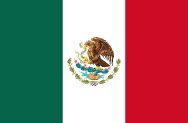
 Mexico
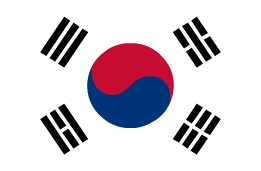 South Korea
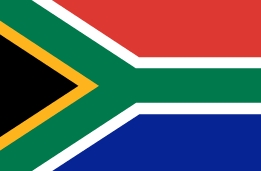 South Africa
 TBD
TBD Canada
 Switzerland
 Qatar
Qatar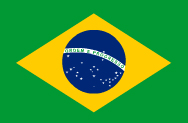 Brazil
 Morocco
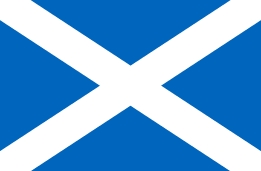 Scotland
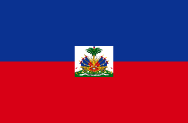 Haiti
Haiti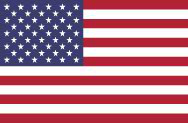 USA
USA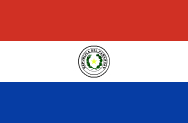 Paraguay
 Australia
 Germany
 Ecuador
 Ivory Coast
 Curaçao
 Netherlands
 Japan
Japan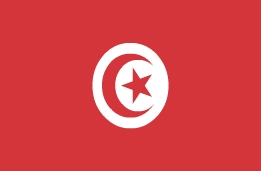 Tunisia
 Belgium
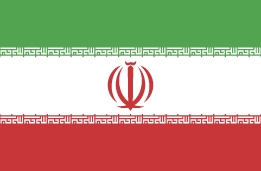 Iran
Iran Egypt
Egypt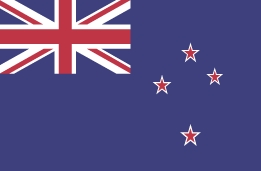 New Zealand
 Spain
Spain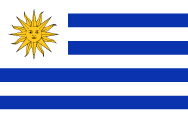 Uruguay
 Saudi Arabia
 Cape Verde
 France
 Senegal
 Norway
 Argentina
 Austria
 Algeria
 Jordan
 Portugal
 Colombia
 Uzbekistan
 England
 Croatia
 Panama
 Ghana
Ghana

2026 World Cup Soccer Ball: Inside the Adidas Trionda – Design, Technology, and What Professionals Are Saying
The official soccer ball for the 2026 World Cup has already generated enormous excitement among football fans, players, and equipment experts around the world. Every World Cup introduces a new match ball, and each one becomes part of football history. From the legendary Telstar used in 1970 to the Brazuca in 2014 and Al Rihla in 2022, the design of the World Cup ball has always played a crucial role in how the tournament is remembered.
For the upcoming 2026 World Cup, the official match ball is called the Adidas Trionda. Designed specifically for the historic tournament hosted by the United States, Canada, and Mexico, the Trionda represents a new generation of soccer ball technology. It combines advanced aerodynamics, real-time tracking technology, and a design inspired by the three host nations.
As the countdown to the world’s biggest football tournament continues, players, engineers, and analysts are already discussing how the new ball will perform on the sport’s biggest stage.
The Official 2026 World Cup Ball: Adidas Trionda
The official ball for the tournament is the Adidas Trionda, unveiled in October 2025 as the match ball for the 2026 FIFA World Cup. The name itself reflects the unique nature of the tournament. The word “Trionda” combines the prefix “tri,” representing the three host nations, with “onda,” a Spanish word meaning “wave.” The result translates roughly to “three waves,” symbolizing the coming together of the United States, Canada, and Mexico for the first tri-nation World Cup.
The ball’s design also reflects this theme. The surface features bold colors representing each host country — red for Canada, blue for the United States, and green for Mexico — arranged in flowing patterns that meet in the center of the ball.
According to Adidas, the design celebrates the unity and energy of the tournament while also improving the performance characteristics required at the highest level of football.
A Revolutionary Four-Panel Construction
One of the most striking innovations in the 2026 World Cup ball is its panel construction. The Adidas Trionda uses just four thermally bonded panels, which is the lowest number ever used for a World Cup match ball.
Traditional soccer balls were constructed with 32 stitched panels, but modern engineering has allowed manufacturers to reduce the number of seams and panels dramatically. Fewer panels create a smoother surface, which improves flight stability and reduces unpredictable movement in the air.
The panels are bonded using advanced thermal technology rather than stitching. This method helps maintain a perfectly round shape and reduces water absorption, ensuring consistent performance even during rain or humid conditions.
The ball’s outer surface also includes textured macro and micro patterns designed to improve grip, control, and aerodynamics. Engineers have carefully studied the physics of airflow over the ball to ensure that it moves predictably through the air when struck by elite players.
Built for a Continent-Wide Tournament
The 2026 World Cup will be played across a vast geographic area, stretching from Canada to Mexico and covering 16 host cities. Each venue has its own climate conditions, altitude, and temperature patterns.
Because of this, engineers designed the Trionda specifically with these environments in mind. The ball underwent extensive testing to ensure that it performs consistently whether matches are played in the heat of Mexico City, the humidity of the southern United States, or the cooler temperatures of Canadian venues.
According to testing data, the textured surface and panel geometry help the ball maintain stable flight characteristics across different weather conditions and playing surfaces.
Connected Ball Technology and the VAR Revolution
Perhaps the most futuristic feature of the 2026 World Cup ball is its integrated technology. The Trionda contains a tiny inertial measurement unit (IMU) sensor embedded inside the ball.
This technology allows the ball to send real-time data about its movement to the video assistant referee (VAR) system. The sensor tracks every touch of the ball, providing officials with extremely accurate data that can help detect offsides, handballs, and other critical decisions.
The system works alongside advanced tracking cameras and semi-automated offside technology used during major tournaments. By combining these data sources, referees can make faster and more accurate decisions during matches.
Technology like this is becoming increasingly important as the game evolves and as fans demand more transparency and accuracy in officiating decisions.
What Adidas Designers Say About the Ball
Adidas engineers have emphasized that the Trionda is designed to reflect the unity of the host nations while also pushing the limits of soccer ball engineering.
Solène Störmann, Global Category Director of Football Hardware at Adidas, explained the concept behind the design:
“Each arm is dedicated to each host nation and reunites in the middle of the ball in the form of a triangle.”
This triangular convergence represents the collaboration between the United States, Canada, and Mexico in hosting the tournament.
Designers also say the ball’s flowing lines are inspired by the iconic “Mexican wave” often seen in stadiums, reflecting the energy and excitement of the World Cup crowd.
Mixed Reactions from the Football Community
As with every new World Cup ball, reactions from players, fans, and analysts have been mixed. Some observers have praised the bold design and modern technology, while others have expressed concerns about how the ball might behave during matches.
Some critics have compared the Trionda to the controversial Jabulani ball used during the 2010 World Cup, which many goalkeepers claimed moved unpredictably through the air.
However, modern engineering techniques and improved aerodynamics testing aim to prevent the kinds of problems that plagued earlier designs. Adidas has spent years refining its approach to ensure that the ball behaves consistently across different playing conditions.
Many analysts also note that initial skepticism about new World Cup balls is common. Once the tournament begins, players quickly adapt, and the ball often becomes associated with iconic goals and unforgettable moments.
Legendary Players Attend the Launch
The official unveiling of the Trionda ball in New York attracted several football legends, highlighting the importance of the moment in the sport’s history.
Among those attending the launch event were iconic players such as Zinedine Zidane, Cafu, and Alessandro Del Piero, all of whom have experienced the World Cup stage firsthand. Their presence emphasized how the World Cup ball is more than just equipment—it becomes a symbol of the tournament itself.
Every four years, the ball used in the tournament becomes part of football folklore, remembered alongside the goals and matches that define the competition.
The Evolution of World Cup Match Balls
The Trionda continues a long tradition of innovation in World Cup ball design. Since Adidas first began producing official match balls in 1970, each tournament has introduced new materials, new panel designs, and new aerodynamic features.
Some World Cup balls have become legendary. The Telstar introduced the classic black-and-white pattern. The Fevernova used in 2002 introduced bold colors. The Brazuca in 2014 became famous for its reliability and stability. The Al Rihla used in 2022 introduced connected ball technology.
The Trionda builds on these developments by combining aerodynamic engineering with digital tracking technology. It represents the next step in the evolution of the game.
Why the World Cup Ball Matters
At first glance, a soccer ball might seem like a simple piece of equipment. But at the elite level of football, the characteristics of the ball can influence everything from passing accuracy to long-range shots.
Players train for months to understand how a new ball behaves. Small differences in surface texture, weight distribution, and aerodynamics can affect how the ball curves, dips, or accelerates when struck.
For goalkeepers, these differences can be especially important. A ball that moves unpredictably in the air can make long-range shots significantly harder to save.
This is why new World Cup balls are tested extensively by professional players and equipment engineers before they are used in the tournament.
The Role of Physics in Modern Soccer Balls
The design of a World Cup ball involves sophisticated mathematics and physics. Engineers analyze airflow patterns, turbulence, and spin rates to understand how the ball moves during flight.
By adjusting panel shapes and surface textures, manufacturers can influence how air flows around the ball. This determines whether shots travel smoothly, curve dramatically, or dip suddenly toward the goal.
These aerodynamic properties are crucial for modern football, where players frequently strike the ball at speeds exceeding 100 kilometers per hour.
The Ball That Will Define the Tournament
Ultimately, the Adidas Trionda will become part of the story of the 2026 World Cup itself. The ball used in a tournament becomes forever linked with the goals, saves, and unforgettable moments that define the competition.
Fans still remember Diego Maradona’s brilliance in 1986, Zinedine Zidane’s performances in 1998, and the dramatic finals of recent tournaments. The ball used in those competitions became part of those memories.
The same will likely be true in 2026. The Trionda will be kicked, passed, and struck thousands of times during the tournament. It will travel through packed stadiums, across television screens, and into the history books of football.
Final Thoughts
The 2026 World Cup promises to be the largest football tournament ever held, and the Adidas Trionda will be at the center of every match.
With cutting-edge technology, a unique design inspired by the three host nations, and extensive engineering behind its performance, the Trionda represents the future of football equipment.
Whether it becomes remembered for spectacular goals, dramatic moments, or technological innovation, one thing is certain: the official ball of the 2026 World Cup will play a central role in shaping the story of the tournament.
As fans around the world prepare for kickoff, the Trionda will soon become one of the most recognizable soccer balls on the planet.