

 Mexico
 South Korea
 South Africa
 TBD
TBD Canada
 Switzerland
 Qatar
Qatar Brazil
 Morocco
 Scotland
 Haiti
Haiti USA
USA Paraguay
 Australia
 Germany
 Ecuador
 Ivory Coast
 Curaçao
 Netherlands
 Japan
Japan Tunisia
 Belgium
 Iran
Iran Egypt
Egypt New Zealand
 Spain
Spain Uruguay
 Saudi Arabia
 Cape Verde
 France
 Senegal
 Norway
 Argentina
 Austria
 Algeria
 Jordan
 Portugal
 Colombia
 Uzbekistan
 England
 Croatia
 Panama
 Ghana
Ghana

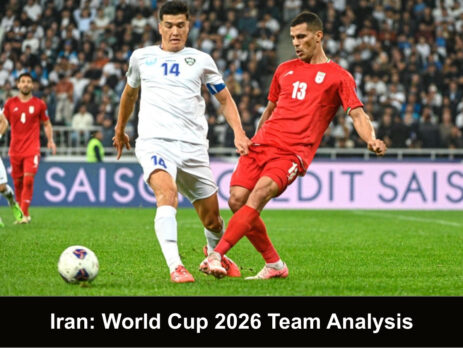
Iran 2026 World Cup: Team Analysis, Roster Projection & Preview
Iran enters the 2026 World Cup cycle as one of Asia’s most consistent and tactically disciplined national teams. Known as Team Melli, Iran has established a long tradition of qualification in FIFA World Cups, marking their seventh appearance in 2026. The squad combines experienced leaders with technically capable attackers, and although the country has never advanced beyond the group stage, this cycle represents one of its best opportunities to make World Cup history.
The Iran National Team has been drawn into Group G at the 2026 FIFA World Cup alongside Belgium, Egypt, and New Zealand — a grouping many observers see as favorable for a potential run to the knockout rounds.
Tactical Foundation
Iran’s tactical identity centers on defensive structure, midfield control, and efficient attacking transitions.
Compact defensive shape – Iran prioritizes tight spacing between defensive and midfield lines to limit opponents’ central penetration.
Midfield organization – The team emphasizes positional discipline and measured ball circulation through central areas, enabling controlled buildup.
Direct vertical attacking play – Quick forward transitions and early passes into advanced attackers are central, particularly through wings and strikers.
Formation adaptability – Iran commonly operates in a 4-2-3-1 or 4-3-3, but can shift toward a more compact block depending on opponent strengths.
This combination of tactical discipline and structured transitions has allowed Iran to remain competitive across AFC qualifying and continental tournaments.
Team Performance in the Last Year
Through the past 12–18 months, Iran maintained strong form in both World Cup qualifying and international friendlies, ultimately securing their place at the 2026 tournament. Key performances in AFC qualifying highlighted both attacking consistency and defensive resilience.
Attack
Iran’s attack blends veteran skill with technical movement.
Mehdi Taremi – Captain and chief scoring threat, who scored crucial goals to secure Iran’s qualification.
Sardar Azmoun – Experienced forward with aerial ability and finishing threat.
Mohammad Mohebi – Wide attacker with creativity and ball progression.
Saman Ghoddos – Versatile midfielder contributing both goals and defensive work.
Mehdi Torabi – Winger providing pace and attacking support.
Iran’s attacking patterns emphasize:
Vertical passes into forward runners
Wide buildup and crossing into the box
Midfield support on transition
Set-piece involvement
Defense
Iran’s defense remains structured and disciplined.
Majid Hosseini – Veteran leader in central defense.
Amin Hazbavi – Emerging center-back with physical presence.
Saleh Hardani – Full-back with high duel success rate.
Milad Mohammadi – Left-back offering experience and work rate.
Goalkeeper Alireza Beiranvand and fellow shot-stoppers such as Payam Niazmand provide reliable coverage, combining experience with multi-tournament visibility.
Expected 2026 Iran World Cup Roster
Goalkeepers
Alireza Beiranvand – Veteran starter with international tournament experience. :contentReference[oaicite:13]{index=13} Payam Niazmand – Strong shot-stopper with domestic pedigree. :contentReference[oaicite:14]{index=14} Mohammadreza Akhbari – Reliable third option. :contentReference[oaicite:15]{index=15}
Defenders
Majid Hosseini – Defensive leader. :contentReference[oaicite:16]{index=16} Amin Hazbavi – Physical center-back presence. :contentReference[oaicite:17]{index=17} Ali Nemati – Wide defensive option. :contentReference[oaicite:18]{index=18} Saleh Hardani – Full-back with strong duel success. :contentReference[oaicite:19]{index=19} Milad Mohammadi – Left-back with experience. :contentReference[oaicite:20]{index=20} Shojae Khalilzadeh – Central defensive depth. :contentReference[oaicite:21]{index=21} Ramin Rezaeian – Versatile defender with offensive contributions. :contentReference[oaicite:22]{index=22}
Midfielders
Saman Ghoddos – Creative box-to-box midfielder. :contentReference[oaicite:23]{index=23} Omid Ebrahimi – Midfield anchor with organizational discipline (likely). Milad Mohammadi (midfield flexibility) – Provides energy and support. :contentReference[oaicite:24]{index=24} Ali Qasaei – Domestic technical contributor. Mehdi Torabi – Wide midfield support. :contentReference[oaicite:25]{index=25} Mehdi Taremi (CAM role support) – Technical influence. :contentReference[oaicite:26]{index=26}
Forwards / Attackers
Mehdi Taremi – Captain and primary goal threat. :contentReference[oaicite:27]{index=27} Sardar Azmoun – Target forward presence. :contentReference[oaicite:28]{index=28} Mohammad Mohebi – Wide attacking presence. :contentReference[oaicite:29]{index=29} Alireza Jahanbakhsh – Experienced wide option (likely based on recent rosters). Yousef Mazraeh – Emerging talent pushing for inclusion. :contentReference[oaicite:30]{index=30} Reza Mirzaei – Versatile attacking depth.
This projected roster reflects Iran’s balanced blend of veterans, international experience, and emerging talent from domestic and regional leagues.
Players to Watch
Mehdi Taremi
Iran’s captain and leading scorer whose finishing and movement define their attacking threat.
Sardar Azmoun
Physical forward combining aerial presence with clinical finishing.
Saleh Hardani
Full-back with elite tackling and defensive recovery.
Saman Ghoddos
Creative midfielder capable of linking defense and attack.
Alireza Beiranvand
Goalkeeper with tournament experience and strong presence in goal.
Projected Starting XI
Formation: 4-2-3-1
GK: Alireza Beiranvand
RB: Saleh Hardani
CB: Amin Hazbavi
CB: Majid Hosseini
LB: Milad Mohammadi
DM: Omid Ebrahimi
CM: Saman Ghoddos
CM: Mehdi Torabi
RW: Mohammad Mohebi
LW: Alireza Jahanbakhsh
ST: Mehdi Taremi
Iran can also transition into a 4-3-3 with an additional central midfielder depending on match demands.
Strengths and Weaknesses
Attack – Strengths: Clinical forward pairing; wide creativity; efficient transitions. Weaknesses: Depth in elite finishing options under sustained defensive pressure.
Midfield – Strengths: Structured positioning; tactical discipline. Weaknesses: Transitional link play against high-pressing opponents.
Defense – Strengths: Compact organization; aerial ability. Weaknesses: Vulnerable against rapid wide play.
Goalkeeping – Strengths: Experienced, reliable shot-stopping. Weaknesses: Distribution consistency under elite pressure.
Tactics – Strengths: Structured defensive identity; vertical efficiency. Weaknesses: Breaking down deep defensive blocks.
Mentality – Strengths: Competitive; resilient; historically consistent qualifiers. Weaknesses: Managing expectations to advance past group stages.
Player Injury Status
Iran’s projected core appears largely available entering the 2026 cycle. Managing club and national workload — especially among key attackers — will be critical as qualification matches ramp up.
Historical World Cup Performance
Iran’s World Cup history includes:
Seven World Cup qualifications (1978–2026)
Never advancing beyond the group stage
Group victories against the United States (1998), Morocco (2018), and Wales (2022)
Their record reflects a consistent presence on the world stage and a growing tactical maturity within AFC competition.
Outlook for the 2026 World Cup
Iran enters the 2026 World Cup cycle with tactical solidity, dependable veterans, and emerging attacking talent. With captain Mehdi Taremi leading the frontline and a structured midfield supporting both defensive stability and attacking transitions, Iran has a strong foundation to compete effectively in Group G.
Group Stage Outlook: Iran is well-positioned to advance from a competitive Group G.
Knockout-Stage Potential: Reaching the Round of 32 would mark a historic first for the nation if Iran can capitalize on its tactical discipline and attacking efficiency.