

 Mexico
 South Korea
 South Africa
 TBD
TBD Canada
 Switzerland
 Qatar
Qatar Brazil
 Morocco
 Scotland
 Haiti
Haiti USA
USA Paraguay
 Australia
 Germany
 Ecuador
 Ivory Coast
 Curaçao
 Netherlands
 Japan
Japan Tunisia
 Belgium
 Iran
Iran Egypt
Egypt New Zealand
 Spain
Spain Uruguay
 Saudi Arabia
 Cape Verde
 France
 Senegal
 Norway
 Argentina
 Austria
 Algeria
 Jordan
 Portugal
 Colombia
 Uzbekistan
 England
 Croatia
 Panama
 Ghana
Ghana

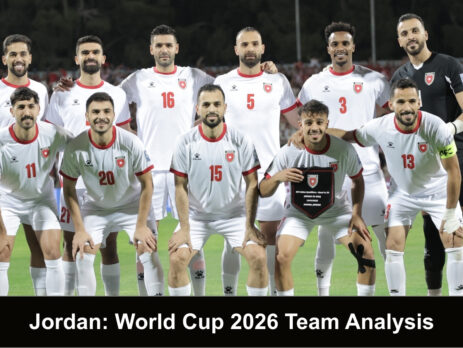
Jordan 2026 World Cup: Team Analysis, Roster Projection & Preview
Jordan enters the 2026 World Cup cycle as one of West Asia’s most disciplined and rapidly improving national teams. Long recognized for their defensive organization and collective work rate, Jordan has steadily grown in confidence within the Asian Football Confederation (AFC). With increased exposure to continental competition and the emergence of technically skilled attackers, Al-Nashama continue building toward sustained international competitiveness.
Under their current technical leadership (final 2026 appointment subject to confirmation), The Jordan National Team emphasizes defensive structure, midfield balance, and controlled attacking transitions. The squad blends experienced leaders with emerging talents such as Musa Al-Taamari and Yazan Al-Naimat. This combination of discipline and attacking growth positions Jordan as a nation aiming to convert regional progress into a potential World Cup breakthrough.
Tactical Foundation
Jordan’s tactical identity is centered on organization and efficiency.
Compact defensive structure – Jordan prioritizes tight spacing between defensive and midfield lines, limiting central penetration and forcing opponents into low-percentage wide attacks.
Midfield discipline – The team emphasizes positional awareness and structured buildup rather than high-risk possession.
Transitional speed – Jordan frequently looks to exploit space quickly after regaining possession, especially through wide channels.
Formation adaptability – Typically operating in a 4-2-3-1 or 4-4-2, Jordan has also shown the ability to shift into a 5-4-1 defensive block when protecting a lead.
This structured approach allows Jordan to remain competitive even against technically superior opponents.
Team Performance in the Last Year
Over the past 12–18 months, Jordan has continued competing in AFC competitions and international friendlies, showing improved attacking cohesion and tactical stability.
Attack
Jordan’s attack increasingly revolves around technical wide play and central mobility.
Musa Al-Taamari – Dynamic winger capable of creating scoring opportunities from wide areas.
Yazan Al-Naimat – Mobile forward with strong finishing instincts.
Ali Olwan – Versatile attacker contributing goals and assists.
Mahmoud Al-Mardi – Creative presence between the lines.
Yazan Abu Arab – Provides physicality in attacking situations.
Jordan’s attacking patterns emphasize:
Quick counters through wide areas
Direct vertical passes
Set-piece opportunities
Midfield support arriving late into the box
Defense
Defensively, Jordan remains structured and organized.
Abdallah Nasib – Experienced center-back with positional discipline.
Yazan Al-Arab – Defensive leader providing aerial presence.
Ahmad Ersan – Reliable defender in high-intensity matches.
Mohammad Abu Hasheesh – Full-back offering defensive balance.
Goalkeeper Yazeed Abu Laila has been a consistent presence in recent fixtures, providing reliable shot-stopping and command inside the penalty area.
Overall, Jordan enters the 2026 cycle as a disciplined, defensively sound side capable of competing in tightly contested matches.
Expected 2026 Jordan World Cup Roster
Goalkeepers
Yazeed Abu Laila – Likely starter with strong reflexes. Abdullah Al-Fakhouri – Depth option with domestic consistency. Amer Shafi – Veteran presence and leadership.
Defenders
Yazan Al-Arab – Central defensive leader. Abdallah Nasib – Experienced organizer. Ahmad Ersan – Defensive depth with versatility. Mohammad Abu Hasheesh – Balanced full-back option. Fares Al-Rashdan – Defensive midfield/defender hybrid. Salem Al-Ajalin – Reliable wide defender. Hadi Al-Hayek – Rotational central defender.
Midfielders
Musa Al-Taamari – Creative wide midfielder. Mahmoud Al-Mardi – Technical playmaker. Fares Al-Rashdan – Defensive midfield anchor. Nizar Al-Rashdan – Box-to-box contributor. Ali Olwan – Attacking midfield presence. Yousef Abu Jalboush – Central midfield depth.
Forwards / Attackers
Yazan Al-Naimat – Primary goal-scoring threat. Ali Olwan – Versatile attacking option. Mahmoud Al-Mardi – Creative forward support. Hamza Al-Dardoor – Experienced striker. Anas Bani Yaseen – Physical forward presence. Mohammad Al-Dhiyab – Emerging attacking option.
This projected roster reflects Jordan’s blend of disciplined structure and emerging attacking talent.
Players to Watch
Musa Al-Taamari
The team’s most dynamic attacking talent. His dribbling and pace are central to Jordan’s offensive approach.
Yazan Al-Naimat
Mobile forward capable of decisive finishing in transition.
Yazan Al-Arab
Defensive anchor providing stability and leadership.
Mahmoud Al-Mardi
Creative midfielder capable of unlocking compact defenses.
Yazeed Abu Laila
Goalkeeper whose shot-stopping consistency underpins Jordan’s defensive identity.
Projected Starting XI
Formation: 4-2-3-1
GK: Yazeed Abu Laila
RB: Mohammad Abu Hasheesh
CB: Yazan Al-Arab
CB: Abdallah Nasib
LB: Salem Al-Ajalin
DM: Fares Al-Rashdan
CM: Nizar Al-Rashdan
RW: Musa Al-Taamari
CAM: Mahmoud Al-Mardi
LW: Ali Olwan
ST: Yazan Al-Naimat
Jordan can also shift into a more defensive 5-4-1 when protecting a narrow lead.
Strengths and Weaknesses
Attack – Strengths: Speed in transition; wide creativity; set-piece threat. Weaknesses: Limited finishing depth against elite defenses.
Midfield – Strengths: Disciplined positioning; structured buildup. Weaknesses: Can struggle under sustained high pressing.
Defense – Strengths: Compact shape; organized lines. Weaknesses: Vulnerable against rapid wide rotations.
Goalkeeping – Strengths: Reliable reflexes. Weaknesses: Distribution under intense pressure.
Tactics – Strengths: Structured system; adaptability. Weaknesses: Limited margin for error against top-tier opponents.
Mentality – Strengths: Cohesive and disciplined. Weaknesses: Limited World Cup tournament experience.
Player Injury Status
Jordan’s projected core remains largely available entering the 2026 cycle. As with most international squads, maintaining fitness across domestic and regional competitions will be critical leading into tournament selection.
Historical World Cup Performance
Jordan has not yet qualified for a FIFA World Cup but has consistently competed within AFC qualification campaigns and regional tournaments.
Their modern era has been defined by:
Defensive discipline
Structured tactical identity
Growing international competitiveness
Outlook for the 2026 World Cup
Jordan enters the 2026 World Cup cycle as a disciplined and tactically organized side seeking a historic qualification breakthrough. With Musa Al-Taamari providing attacking spark and a compact defensive structure supporting controlled transitions, Al-Nashama possess the foundation to compete effectively within Asia.
Group Stage Outlook: Competitive performances are realistic if defensive structure remains consistent.
Knockout-Stage Potential: Qualification would mark a historic milestone and would depend heavily on defensive discipline and efficient finishing.