

 Mexico
 South Korea
 South Africa
 TBD
TBD Canada
 Switzerland
 Qatar
Qatar Brazil
 Morocco
 Scotland
 Haiti
Haiti USA
USA Paraguay
 Australia
 Germany
 Ecuador
 Ivory Coast
 Curaçao
 Netherlands
 Japan
Japan Tunisia
 Belgium
 Iran
Iran Egypt
Egypt New Zealand
 Spain
Spain Uruguay
 Saudi Arabia
 Cape Verde
 France
 Senegal
 Norway
 Argentina
 Austria
 Algeria
 Jordan
 Portugal
 Colombia
 Uzbekistan
 England
 Croatia
 Panama
 Ghana
Ghana

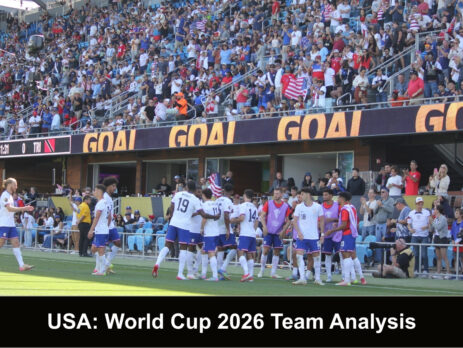
USA 2026 World Cup: Team Analysis, Roster Projection & Preview
United States enters the 2026 World Cup as one of the tournament’s host nations and one of CONCACAF’s most dynamic and rapidly developing teams. With the competition set to be played across the United States, Canada, and Mexico, the U.S. Men’s National Team (USMNT) will look to capitalize on home advantage, youthful depth, and growing European experience. Following a Round-of-16 finish in 2022, the United States continues to build around a technically skilled generation entering its prime.
Under head coach Gregg Berhalter (or confirmed successor ahead of 2026), the United States National Team emphasizes high pressing, midfield athleticism, and vertical attacking transitions. The squad blends experienced leaders such as Christian Pulisic and Tyler Adams with emerging talents including Gio Reyna, Yunus Musah, and Folarin Balogun. This combination of speed, technical ability, and tactical structure positions the USMNT as a competitive host nation entering the 2026 World Cup.
Tactical Foundation
The United States’ tactical identity blends athletic intensity with structured buildup.
High pressing intensity – The USMNT applies coordinated pressure in midfield, seeking quick ball recovery and transitional opportunities.
Midfield mobility – The team relies on athletic, box-to-box midfielders capable of covering ground and progressing play forward.
Wide attacking speed – The U.S. utilizes pace-driven wingers to stretch defensive lines and create isolation opportunities.
Formation flexibility – Typically operating in a 4-3-3 or 4-2-3-1, the United States can shift into a more compact 4-4-2 depending on match dynamics.
This structured yet energetic approach allows the U.S. to compete effectively against both regional rivals and elite international sides.
Team Performance in the Last Year
Over the past 12–18 months, the United States has continued competing strongly in CONCACAF competitions and international friendlies. Performances have reflected depth across positions and increased tactical maturity.
Attack
The USMNT attack blends pace, pressing, and creativity.
Christian Pulisic – Captain and creative focal point capable of decisive moments.
Folarin Balogun – Central striker with mobility and finishing ability.
Timothy Weah – Pace-driven winger offering direct attacking threat.
Gio Reyna – Technical playmaker capable of unlocking compact defenses.
Brenden Aaronson – High-energy attacking midfielder with pressing intensity.
The United States’ attacking patterns emphasize:
Quick vertical transitions
Wide 1v1 isolation
Midfield support arriving late into the box
Pressing-triggered counterattacks
Defense
Defensively, the U.S. blends athleticism and organization.
Chris Richards – Emerging central defender with composure.
Antonee Robinson – Dynamic left-back providing width and recovery speed.
Sergiño Dest – Attack-minded full-back with technical skill.
Tim Ream – Experienced defender offering leadership and positional awareness.
Goalkeeper Matt Turner remains a consistent presence, providing reliable shot-stopping and tournament composure.
Overall, the United States enters the 2026 cycle with depth, youth, and home-field advantage.
Expected 2026 United States World Cup Roster
Goalkeepers
Matt Turner – Established No. 1 with tournament experience. Zack Steffen – Reliable backup option. Drake Callender – Emerging goalkeeper depth.
Defenders
Chris Richards – Central defensive leader. Tim Ream – Veteran presence. Antonee Robinson – Attack-minded left-back. Sergiño Dest – Versatile right-back. Miles Robinson – Physical central defender. Joe Scally – Wide defensive depth option. Cameron Carter-Vickers – Rotational center-back.
Midfielders
Tyler Adams – Defensive midfield anchor and leader. Weston McKennie – Box-to-box presence with goal threat. Yunus Musah – Dynamic central midfielder. Gio Reyna – Creative attacking midfielder. Luca de la Torre – Technical midfield depth. Brenden Aaronson – High-energy attacking option.
Forwards / Attackers
Christian Pulisic – Captain and primary attacking threat. Folarin Balogun – Central striker option. Timothy Weah – Direct wide attacker. Ricardo Pepi – Finishing-oriented striker depth. Josh Sargent – Physical forward alternative. Jordan Morris – Pace option from wide areas.
This projected roster reflects the United States’ blend of youth development and European-based experience.
Players to Watch
Christian Pulisic
Creative leader whose pace and finishing drive the U.S. attack.
Tyler Adams
Midfield anchor responsible for defensive balance and tempo control.
Folarin Balogun
Emerging striker capable of decisive scoring moments.
Antonee Robinson
Dynamic full-back whose overlapping runs add attacking width.
Gio Reyna
Creative playmaker with the ability to unlock compact defenses.
Projected Starting XI
Formation: 4-3-3
GK: Matt Turner
RB: Sergiño Dest
CB: Chris Richards
CB: Tim Ream
LB: Antonee Robinson
CM: Tyler Adams
CM: Weston McKennie
CM: Yunus Musah
RW: Timothy Weah
LW: Christian Pulisic
ST: Folarin Balogun
The United States can also transition into a 4-2-3-1 when emphasizing midfield protection.
Strengths and Weaknesses
Attack – Strengths: Pace; wide explosiveness; pressing intensity. Weaknesses: Finishing consistency in tight matches.
Midfield – Strengths: Athleticism; defensive work rate; depth. Weaknesses: Creative consistency against compact defenses.
Defense – Strengths: Athletic full-backs; structured shape. Weaknesses: Vulnerable to elite technical attackers.
Goalkeeping – Strengths: Reliable shot-stopping. Weaknesses: Distribution under high press.
Tactics – Strengths: High pressing; formation flexibility. Weaknesses: Maintaining composure in high-expectation matches.
Mentality – Strengths: Youthful energy; home-field advantage in 2026. Weaknesses: Managing tournament pressure as host nation.
Player Injury Status
The United States’ projected core remains largely available entering the 2026 cycle. Managing workload for European-based players will be critical ahead of tournament preparation.
Historical World Cup Performance
The United States’ World Cup history includes:
Third place in 1930
Quarterfinal appearance in 2002
Round-of-16 finishes in 2010 and 2022
Their modern era has emphasized:
Youth development
European club integration
High pressing intensity
Outlook for the 2026 World Cup
The United States enters the 2026 World Cup with depth, athleticism, and the advantage of hosting matches on home soil. With Christian Pulisic leading the attack and a balanced midfield core providing structure, the USMNT possesses the tools to compete strongly in front of home supporters.
Group Stage Outlook: The United States should be positioned to advance from the group stage as a host nation.
Knockout-Stage Potential: A Round-of-16 appearance is realistic, with quarterfinal ambitions dependent on defensive consistency and finishing efficiency.