

 Mexico
 South Korea
 South Africa
 TBD
TBD Canada
 Switzerland
 Qatar
Qatar Brazil
 Morocco
 Scotland
 Haiti
Haiti USA
USA Paraguay
 Australia
 Germany
 Ecuador
 Ivory Coast
 Curaçao
 Netherlands
 Japan
Japan Tunisia
 Belgium
 Iran
Iran Egypt
Egypt New Zealand
 Spain
Spain Uruguay
 Saudi Arabia
 Cape Verde
 France
 Senegal
 Norway
 Argentina
 Austria
 Algeria
 Jordan
 Portugal
 Colombia
 Uzbekistan
 England
 Croatia
 Panama
 Ghana
Ghana

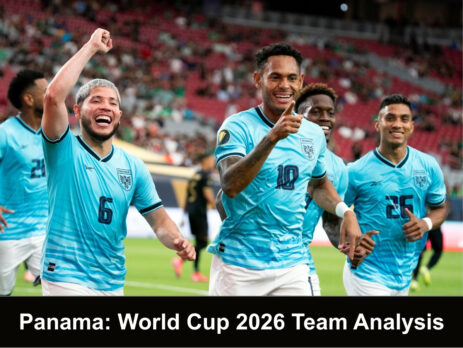
Panama 2026 World Cup: Team Analysis, Roster Projection & Preview
Panama enters the 2026 World Cup as one of Concacaf’s most competitive and tactically disciplined national teams. After earning global respect during their 2018 World Cup debut and continuing to develop through regional competitions, Panama has established itself as a consistent challenger in North and Central America. With a balanced mix of experienced leaders and emerging talents, Los Canaleros continue to refine a structured identity built on defensive organization, midfield intensity, and transitional efficiency.
Under head coach Thomas Christiansen, Panama has emphasized tactical discipline, defensive compactness, and controlled buildup play. The squad blends experienced internationals such as Aníbal Godoy with rising attackers like Ismael Díaz and José Fajardo. This combination of veteran leadership and energetic youth gives Panama a competitive foundation heading into the 2026 World Cup.
Tactical Foundation
Panama’s modern tactical identity is defined by structure, resilience, and collective execution.
Defensive organization and compactness – Panama prioritizes maintaining tight defensive lines and limiting space between midfield and defense. Their disciplined positioning makes them difficult to break down, particularly in tournament settings.
Midfield intensity – Panama’s midfield operates with high work rate and physical engagement. Ball recovery and second-ball control are essential elements of their approach.
Structured buildup play – Rather than relying solely on direct play, Panama has improved its controlled buildup under Christiansen, progressing through central areas before shifting wide.
Transitional efficiency – Quick counterattacks remain a core strength. The Panama National Team looks to exploit defensive gaps immediately after turnovers.
Panama typically operates in a 4-2-3-1 or 4-3-3 formation but has also utilized a back-three system in certain matchups depending on opponent strength and tournament context.
Team Performance in the Last Year
Over the past 12–18 months, Panama has continued competing strongly in Concacaf competitions and international friendlies. Their performances have reflected improved tactical cohesion and growing confidence against regional rivals.
Attack
Panama’s attack focuses on intelligent movement and vertical transitions rather than pure possession dominance.
Ismael Díaz – A key attacking figure capable of creating space and finishing in transition.
José Fajardo – Mobile striker with strong work rate and pressing ability.
Yoel Bárcenas – Creative wide option with crossing accuracy.
Alberto Quintero – Experienced attacker offering composure and versatility.
Édgar Bárcenas – Dynamic wide presence who contributes defensively and offensively.
Panama’s attacking patterns emphasize:
Direct vertical passes
Wide-area overloads
Late midfield runs
Set-piece efficiency
Defense
Defensively, Panama remains disciplined and structured. Key contributors include:
Harold Cummings – Veteran center-back with leadership presence.
Fidel Escobar – Physical defender comfortable in multiple systems.
Andrés Andrade – Ball-playing defender with recovery speed.
Michael Murillo – Attack-minded full-back who balances width and defensive duties.
Goalkeeper Luis Mejía has been a consistent presence in recent competitive matches, offering strong reflexes and command inside the penalty area.
Overall, Panama enters the 2026 cycle with tactical maturity and a clear defensive identity.
Expected 2026 Panama World Cup Roster
Goalkeepers
Luis Mejía – Experienced and composed starter. Orlando Mosquera – Athletic backup with strong reflexes. César Samudio – Depth option with domestic experience.
Defenders
Harold Cummings – Veteran leader in central defense. Fidel Escobar – Versatile defender with physical presence. Andrés Andrade – Modern center-back comfortable on the ball. Michael Murillo – Dynamic right-back with attacking support. Éric Davis – Reliable left-back with set-piece delivery. José Córdoba – Young defensive option with upside. César Blackman – Wide defender providing depth.
Midfielders
Aníbal Godoy – Midfield anchor and captain. Adalberto Carrasquilla – Technical leader with ball progression ability. Cristian Martínez – Energetic central midfielder. Édgar Yoel Bárcenas – Wide midfielder with creative threat. Abdiel Ayarza – Defensive midfield depth option. Jovani Welch – Developing box-to-box presence.
Forwards / Attackers
Ismael Díaz – Key attacking outlet. José Fajardo – Mobile central striker. Alberto Quintero – Experienced attacking option. Cecilio Waterman – Direct forward with finishing ability. Freddy Góndola – Versatile wide attacker. José Luis Rodríguez – Pace option in transition.
This projected roster reflects Panama’s blend of experience, regional competitiveness, and tactical depth.
Players to Watch
Adalberto Carrasquilla
Panama’s midfield engine. His ability to dictate tempo and break lines with passing is central to the team’s structure.
Aníbal Godoy
The experienced leader who provides composure and tactical balance.
Ismael Díaz
A direct attacker capable of decisive moments in transition.
Michael Murillo
Provides width and defensive recovery from the full-back position.
José Fajardo
An energetic striker who presses aggressively and finishes efficiently.
Projected Starting XI
Formation: 4-2-3-1
GK: Luis Mejía
RB: Michael Murillo
CB: Harold Cummings
CB: Fidel Escobar
LB: Éric Davis
DM: Aníbal Godoy
CM: Adalberto Carrasquilla
RW: Yoel Bárcenas
CAM: Cristian Martínez
LW: Ismael Díaz
ST: José Fajardo
Panama can also shift into a 4-3-3 or 3-4-3 depending on opponent strategy.
Strengths and Weaknesses
Attack – Strengths: Efficient transitions; set-piece danger; wide creativity. Weaknesses: Can struggle against elite defensive lines.
Midfield – Strengths: Physical presence; strong ball recovery. Weaknesses: Depth consistency under heavy pressing.
Defense – Strengths: Organized shape; experienced center-backs. Weaknesses: Vulnerable to quick positional rotations.
Goalkeeping – Strengths: Reliable shot-stopping. Weaknesses: Distribution under sustained pressure.
Tactics – Strengths: Disciplined structure; adaptability. Weaknesses: Limited margin for error against top-tier nations.
Mentality – Strengths: Competitive; resilient; tournament-hardened. Weaknesses: Managing pressure in knockout stages.
Player Injury Status
Panama’s projected core remains largely healthy entering the 2026 cycle. As with most international squads, player fitness will depend heavily on club workload throughout the season. Depth in midfield and wide positions will be important should injuries arise before tournament selection.
Historical World Cup Performance
Panama made its historic World Cup debut in 2018. While the team did not advance beyond the group stage, the tournament marked a milestone moment in national football history.
Their modern era has been defined by:
Consistent Concacaf competitiveness
Improved tactical structure
Growing international recognition
Outlook for the 2026 World Cup
Panama enters the 2026 World Cup as a disciplined and tactically organized team capable of challenging regional rivals and competing against higher-ranked opposition. With Adalberto Carrasquilla orchestrating midfield and a structured defensive unit providing stability, Los Canaleros possess the tools to compete effectively.
Group Stage Outlook: Panama is capable of earning critical points in a balanced group.
Knockout-Stage Potential: Advancing beyond the group stage would represent a significant achievement and remains within reach if defensive discipline and finishing efficiency align.