

 Mexico
 South Korea
 South Africa
 TBD
TBD Canada
 Switzerland
 Qatar
Qatar Brazil
 Morocco
 Scotland
 Haiti
Haiti USA
USA Paraguay
 Australia
 Germany
 Ecuador
 Ivory Coast
 Curaçao
 Netherlands
 Japan
Japan Tunisia
 Belgium
 Iran
Iran Egypt
Egypt New Zealand
 Spain
Spain Uruguay
 Saudi Arabia
 Cape Verde
 France
 Senegal
 Norway
 Argentina
 Austria
 Algeria
 Jordan
 Portugal
 Colombia
 Uzbekistan
 England
 Croatia
 Panama
 Ghana
Ghana

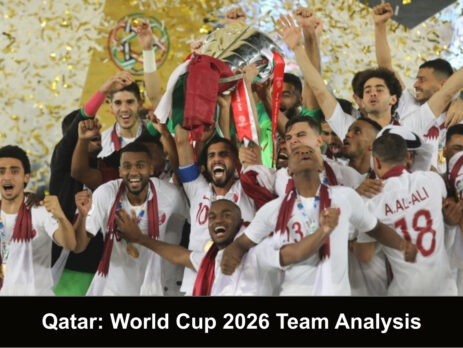
Qatar 2026 World Cup: Team Analysis, Roster Projection & Preview
Qatar enters the 2026 World Cup cycle as one of Asia’s most technically structured and tactically disciplined national teams. Following their historic hosting of the 2022 FIFA World Cup and multiple AFC Asian Cup triumphs, Qatar continues building a modern football identity centered on possession, organization, and structured attacking patterns. With a core group of players developed through long-term national programs, the Maroons remain a competitive force within the Asian Football Confederation (AFC).
Under head coach Marquez Lopez (or confirmed successor ahead of 2026), The Qatar National Team emphasizes midfield ball control, positional discipline, and quick attacking transitions. The squad blends experienced figures such as Hassan Al-Haydos with dynamic contributors including Akram Afif and Almoez Ali. This combination of technical quality and tactical cohesion positions Qatar as a strong regional contender entering the 2026 qualification cycle.
Tactical Foundation
Qatar’s tactical identity is built on structured possession and disciplined organization.
Midfield ball retention – Qatar prioritizes short passing sequences and positional awareness to control tempo.
Compact defensive shape – The team maintains disciplined spacing between lines to limit central penetration.
Quick attacking combinations – Qatar relies on fluid movement between forwards to create space in advanced areas.
Formation flexibility – Typically operating in a 3-5-2 or 4-3-3, Qatar can shift shape depending on opponent and match state.
This structured approach allows Qatar to compete effectively against both regional rivals and technically advanced opponents.
Team Performance in the Last Year
Over the past 12–18 months, Qatar has continued competing in AFC competition and international friendlies, refining its tactical system and maintaining attacking consistency.
Attack
Qatar’s attack blends technical creativity with movement.
Akram Afif – Creative winger capable of decisive goals and assists.
Almoez Ali – Clinical striker with strong movement inside the box.
Hassan Al-Haydos – Experienced attacking presence and leader.
Abdullah Al-Ahrak – Technical midfielder contributing to buildup play.
Ahmed Alaaeldin – Wide attacker providing pace and width.
Qatar’s attacking patterns emphasize:
Short combination play near the box
Wide isolation
Midfield support in transition
Set-piece efficiency
Defense
Defensively, Qatar remains structured and disciplined.
Bassam Al-Rawi – Central defensive leader with composure.
Abdelkarim Hassan – Attack-minded left-back with defensive awareness.
Tarek Salman – Versatile defensive option.
Pedro Miguel – Reliable right-back with positional discipline.
Goalkeeper Saad Al-Sheeb has been a consistent presence in major tournaments, offering reliable shot-stopping and leadership.
Overall, Qatar enters the 2026 cycle with tactical cohesion and strong regional experience.
Expected 2026 Qatar World Cup Roster
Goalkeepers
Saad Al-Sheeb – Established starter with tournament experience. Meshaal Barsham – Reliable depth option. Salah Zakaria – Emerging goalkeeper alternative.
Defenders
Bassam Al-Rawi – Defensive anchor. Abdelkarim Hassan – Experienced left-back. Tarek Salman – Versatile defender. Pedro Miguel – Reliable right-back. Homam Ahmed – Wide defensive depth. Ismail Mohammed – Rotational defensive option. Musab Kheder – Central defensive depth.
Midfielders
Abdullah Al-Ahrak – Creative central midfielder. Karim Boudiaf – Defensive midfield stabilizer. Assim Madibo – Box-to-box contributor. Hassan Al-Haydos – Experienced attacking presence. Mostafa Mashaal – Emerging midfield option. Ali Assadalla – Tactical depth contributor.
Forwards / Attackers
Akram Afif – Primary attacking focal point. Almoez Ali – Clinical striker option. Ahmed Alaaeldin – Pace-driven wide attacker. Mohammed Muntari – Physical striker alternative. Abdulaziz Hatem – Versatile forward depth. Yusuf Abdurisag – Rotational wing option.
This projected roster reflects Qatar’s structured team identity and cohesive development program.
Players to Watch
Akram Afif
Creative winger whose dribbling and finishing define Qatar’s attacking threat.
Almoez Ali
Clinical striker capable of decisive tournament goals.
Bassam Al-Rawi
Defensive leader anchoring the back line.
Saad Al-Sheeb
Experienced goalkeeper providing composure and reliability.
Abdullah Al-Ahrak
Technical midfielder contributing to tempo control.
Projected Starting XI
Formation: 3-5-2
GK: Saad Al-Sheeb
CB: Bassam Al-Rawi
CB: Tarek Salman
CB: Abdelkarim Hassan
RM: Pedro Miguel
CM: Karim Boudiaf
CM: Abdullah Al-Ahrak
CM: Assim Madibo
LM: Homam Ahmed
ST: Almoez Ali
ST: Akram Afif
Qatar can also transition into a 4-3-3 when emphasizing midfield control.
Strengths and Weaknesses
Attack – Strengths: Technical creativity; cohesive forward movement; set-piece quality. Weaknesses: Limited depth against elite defensive units.
Midfield – Strengths: Structured positioning; possession control. Weaknesses: Physical matchups against high-intensity opponents.
Defense – Strengths: Compact shape; tactical discipline. Weaknesses: Vulnerability to rapid wide rotations.
Goalkeeping – Strengths: Reliable shot-stopping. Weaknesses: Distribution under aggressive pressing.
Tactics – Strengths: Structured system; formation flexibility. Weaknesses: Maintaining tempo against top-tier nations.
Mentality – Strengths: Cohesive national program; tournament experience. Weaknesses: Managing expectations beyond regional dominance.
Player Injury Status
Qatar’s projected core remains largely available entering the 2026 cycle. Maintaining squad fitness across domestic competitions will be important ahead of tournament selection.
Historical World Cup Performance
Qatar’s World Cup history includes:
Hosting the 2022 FIFA World Cup
Multiple AFC Asian Cup titles
Growing international experience
Their football identity has emphasized:
Structured tactical development
Technical midfield play
Long-term national program cohesion
Outlook for the 2026 World Cup
Qatar enters the 2026 World Cup cycle with structured discipline, cohesive team identity, and regional experience. With Akram Afif driving attacking creativity and a compact defensive structure anchoring stability, the Maroons possess the tools to compete strongly within Asia.
Group Stage Outlook: Competitive performances are realistic with disciplined execution.
Knockout-Stage Potential: Advancement would depend on defensive consistency and efficient finishing in key moments.